 (Image source: Gemini)
 The headlines over the years have started saying something like "Oscars Ratings Hit Five-Year High" or "Emmys Rebound with Record Growth." But if you look at the actual numbers from 2025 and 2026, you'll see a much different picture. The reality is that these "highs" are still deep in the basement compared to where we were just ten years ago. Think of it like a stock that dropped 90% and then gained 2% back. Sure, it's going up, but you're still broke. In 2014, the Oscars pulled in a massive 43.7 million viewers. Last year, in 2025, that number was just under 20 million. We're celebrating a "rebound" that represents less than half of the audience we had a decade ago. So, what's actually happening here? Why did we collectively decide to stop caring about the biggest night in Hollywood?
Analyzing the Decade-Low Slump
When we talk about viewer fatigue, we're talking about a slow, grinding decline that started long before the world shut down in 2020. The 2025 Oscars pulled in about 19.69 million people. Although that was technically a tiny 1% increase from the year before, it doesn't change the fact that we're living in a decade-low era. The Grammys and the Golden Globes are in the same boat. They're fighting for scraps of attention in a world that has moved on to other things.
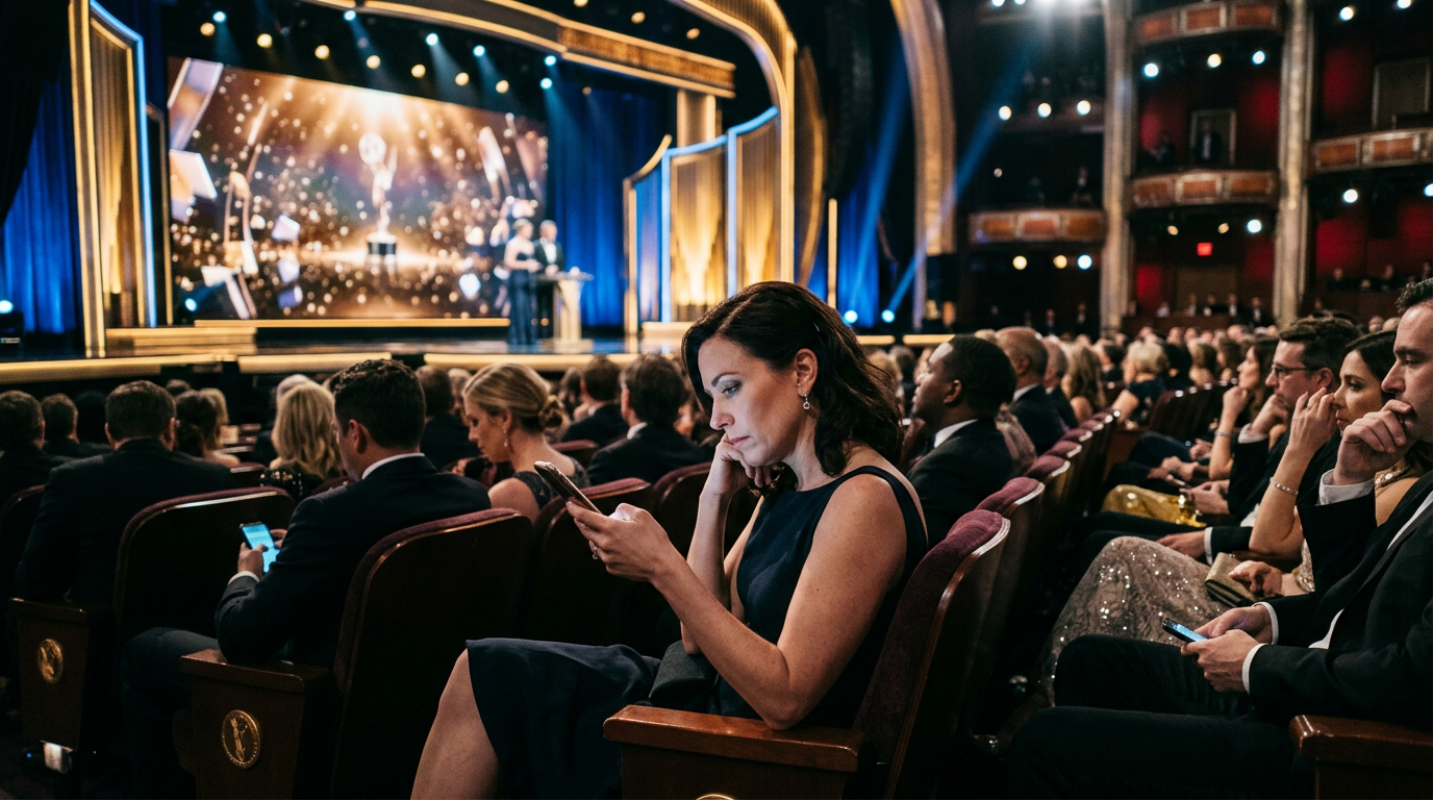
The gap between linear television and modern engagement is where the real story lives. Your parents might still sit down at 8:00 PM to watch a broadcast on ABC or CBS. You probably don't. The industry is trying to count "multi-platform engagement" to make their numbers look better, but a view on a 15-second TikTok clip isn't the same as someone sitting through three hours of commercials.
When there are 500 scripted shows a year and a million movies on streaming, a single trophy doesn't carry the weight it used to. We're exhausted by the "prestige" label because everything is marketed as a must-watch event.
Audiences Are Tuning Out
Have you ever looked at the Best Picture nominees and realized you haven't even heard of half of them? That's a huge part of the problem. There's a massive disconnect between what critics love and what you actually watch on a Friday night. A 2024 study found that 53% of consumers think award show judges are totally out of touch with what the public actually likes.¹ When "box office darlings" get ignored in favor of niche indie films, the average viewer feels like the party wasn't meant for them anyway.
Then you have what people are calling the TikTok Effect. Why would you spend four hours watching a bloated ceremony when you can see every winner and every funny moment in a 60-second recap the next morning? Younger audiences prioritize what experts call "information efficiency." They want the results, the memes, and the fashion, but they don't want the filler.
Social media has also changed how we see celebrities. Back in the 90s, the Oscars were the only time you saw these people "unfiltered." Now, you see what they ate for breakfast on Instagram. You see their gym routines on TikTok. The "inaccessible icon" is dead. When stars are constantly available on your phone, seeing them walk a red carpet feels less like a rare event and more like just another post in your feed.
Can the Traditional Ceremony Survive?
Let's be honest about the show itself. It's predictable. It's rigid. It's often incredibly boring. You have the same structure every single time: a monologue, some scripted banter that feels forced, a few awards, a musical number, and then more awards. It's the digital equivalent of a meeting that could have been an email.
The lack of spontaneity is what kills the vibe. Everything is so carefully managed and over-rehearsed that the "genuine" moments feel like they've been approved by a committee of twenty publicists. Even the jokes feel safe. When the show tries to be edgy, it often misses the mark, and when it's too safe, it's forgettable.
Then there's the hosting problem. We've seen the "hostless" experiment, and we've seen the return of the high-profile comedian. Neither seems to be a permanent fix. A host can bring energy, but they can't fix a format that was designed for a 1950s television audience. The three-hour runtime is a relic of a time when we didn't have infinite options at our fingertips.
The Industry Pivot Approach
The industry knows it's in trouble, so it's starting to pivot. You might have noticed that the 2025 Oscars were live-streamed on Hulu for the first time.² This was a huge move. Streaming is basically the life raft for these ceremonies. Although the linear TV audience is getting older, streaming is where they're catching the younger viewers who don't even own a cable box.
Producers are also "producing for the clip" now. They aren't trying to make a great three-hour show as much as they're trying to create three or four "viral moments." Think of Ryan Gosling’s "I’m Just Ken" performance. That wasn't just a part of the show. It was a standalone product designed to live on YouTube and social media for weeks.
Advertisers are also changing how they spend their money. Even though the ratings are down, award shows are still one of the few places where people watch things live. Brands are willing to pay a premium for that. We're seeing a huge surge in Connected TV (CTV) ad spend. These ads are more targeted and sometimes even shoppable. You might see a dress on the red carpet and be able to click a link to buy something similar right from your remote.